Search This Blog

Monday, April 6, 2015

The weekend cook: Thomasina Miers’ recipes for the Easter holidays

Ifind it soothing to spend a few hours chopping, bashing and mixing, so to me holiday cooking is the very definition of luxury (and much more fun than the regular midweek routine). So here are two dishes with a distinctly Eastery feel: one a slow braise full of sensational spicing, the other a blissfully simple, flourless, lemony pud. Happy Easter.

Braised oxtail with saffron risotto and orange gremolata

The secret to great risotto is to beat the rice as much as you can while it’s cooking. This helps bind the starches and fat, and creates that famous, creamy texture. The oxtail’s flavour improves immeasurably if you make it a few days ahead. Serves six-plus.
Olive oil
2 oxtails, cut into chunks
1 tbsp flour
Salt and freshly ground black pepper
2 onions, peeled and finely sliced
3 garlic cloves, peeled and finely sliced
3 bay leaves
1 sprig rosemary
1 star anise
1 cinnamon stick
Peel from ½ orange
400g tinned plum tomatoes, drained
500ml red wine
500ml beef stock
6 carrots, peeled and cut in half lengthways
For the risotto
150g butter
2 medium onions, peeled and finely chopped
2 celery sticks, finely chopped
500g carnaroli rice
125ml dry vermouth
1½-1¾ litres hot chicken stock
1 tsp saffron threads soaked in 2 tbsp hot water
100g parmesan, grated
For the gremolata
1 small orange, zest finely grated
½ garlic clove, peeled and finely chopped
½ bunch parsley, leaves picked and finely chopped
Heat the oven to 170C/325F/gas mark 3. Put a tablespoon of oil in a heavy casserole over a medium-high heat. Dust the oxtail in well-seasoned flour and brown the meat in batches, adding more oil as needed; transfer each batch of browned meat to a bowl.
Wipe clean the pan, turn down the heat and add two tablespoons of oil. Sweat the onions for 10 minutes, until soft and sweet, adding the garlic halfway through. Stir in the herbs, spices, orange peel, tomatoes and oxtail.
Pour on the wine, add enough stock just to cover and bring to a boil. Season generously, cover partially and pop in the oven for three hours, until the meat is falling off the bone; add the carrots for the last hour. Leave the casserole to cool. A layer of fat should rise to the top – skim off the excess and, if the sauce is still a bit on the thin side, remove the meat and reduce the sauce for five minutes or so, to thicken.
For the risotto, melt half the butter in a heavy pan, wider than it is tall, over a medium heat and add the onion and celery. Add a pinch of salt and sweat for 10 minutes, until soft, then add the rice and stir to coat every grain in butter.
Add the vermouth and, as soon as it begins to bubble, add hot stock a ladle at a time. Stir vigorously with a wooden spoon and make sure the rice has absorbed each ladle of stock before adding the next. Stir in the saffron once half the stock has been used. Continue adding the stock, stirring, until most of it has been absorbed and the risotto has a light, nutty bite – this will take about 15-20 minutes (you may need more or less stock, depending on the rice). Take the pot off the heat and, bearing in mind that the rice will keep absorbing liquid, stir in the cheese and remaining butter. Season to taste and add a little more liquid if the risotto is too thick.
Very finely chop all the gremolata ingredients. Spoon generous dollops of risotto on to hot plates or bowls, top with a few pieces of the oxtail and spoon over lots of sauce. Sprinkle some gremolata on each portion and serve at once.

St Clement’s pudding cake

Thomasina Miers’ St Clement’s pudding cake: ‘Rich and light.’ Photograph: Johanna Parkin for the Guardian. Food styling: Maud Eden
A deliciously citrussy flourless cake that manages to feel both rich and light. I like it with lots of thick cream. Serves six to eight.
250g soft butter, plus extra to grease
180g golden caster sugar
2 heaped teaspoons honey
4 eggs
1 tsp vanilla essence
1 orange, zest and juice
2 lemons, zest and juice
125g fine polenta
125g ground almonds
A generous pinch of salt
Heat the oven to 160C/320F/gas mark 2½ and grease a 20cm cake tin or ovenproof dish. In a bowl, beat the butter, sugar and honey until light and fluffy, then add the eggs one at a time, beating continuously. Beat in the vanilla essence and citrus zest and juices. Don’t worry if the mixture curdles: once cooked, it will be beautifully smooth. Fold in the polenta, almonds and salt.
Pour the mix into the tin and bake for 35-40 minutes, until just set. Remove, leave to cool a little and serve warm with a jug of the best cream you can afford.

And for the rest of the week…

The oxtail ragù makes great leftovers – just take all the meat off the bone and eat later in the week with some creamy, parmesan-rich fast-cook polenta or with spaghetti for a very satisfying quick meal. Leftover risotto makes a tasty snack: roll it into balls, fill with blue cheese, dust in breadcrumbs (or excess ground almonds from the cake) and deep-fry until crisp. All just need a fresh, green salad alongside. If you’ve got lots of oranges and lemons, use them in early spring salads: one of my favourite seasonal combos is orange segments, tiny florets of raw cauliflower and slivers of fennel and apple in a sharp french dressing.

Monday, March 9, 2015

The foodie traveller … on the baklava trail in Turkey

Sticky, sweet, crunchy, flaky, soft and nutty... baklava is a staple of every pastry shop in the east from Athens to Ankara, but the ancient city of Gaziantep (previously Antep) in south-east Turkey, is the only place in the world where it has been granted protected status – granted by the European Commission in 2014.
Although there are many places that claim to have invented it, it’s likely that baklava originated in what is now the Middle East. During the Byzantine empire, it made its way westward into Anatolia, and then to Istanbul, where Ottoman chefs adapted it for the notoriously picky sultans living in Topkapi Palace.
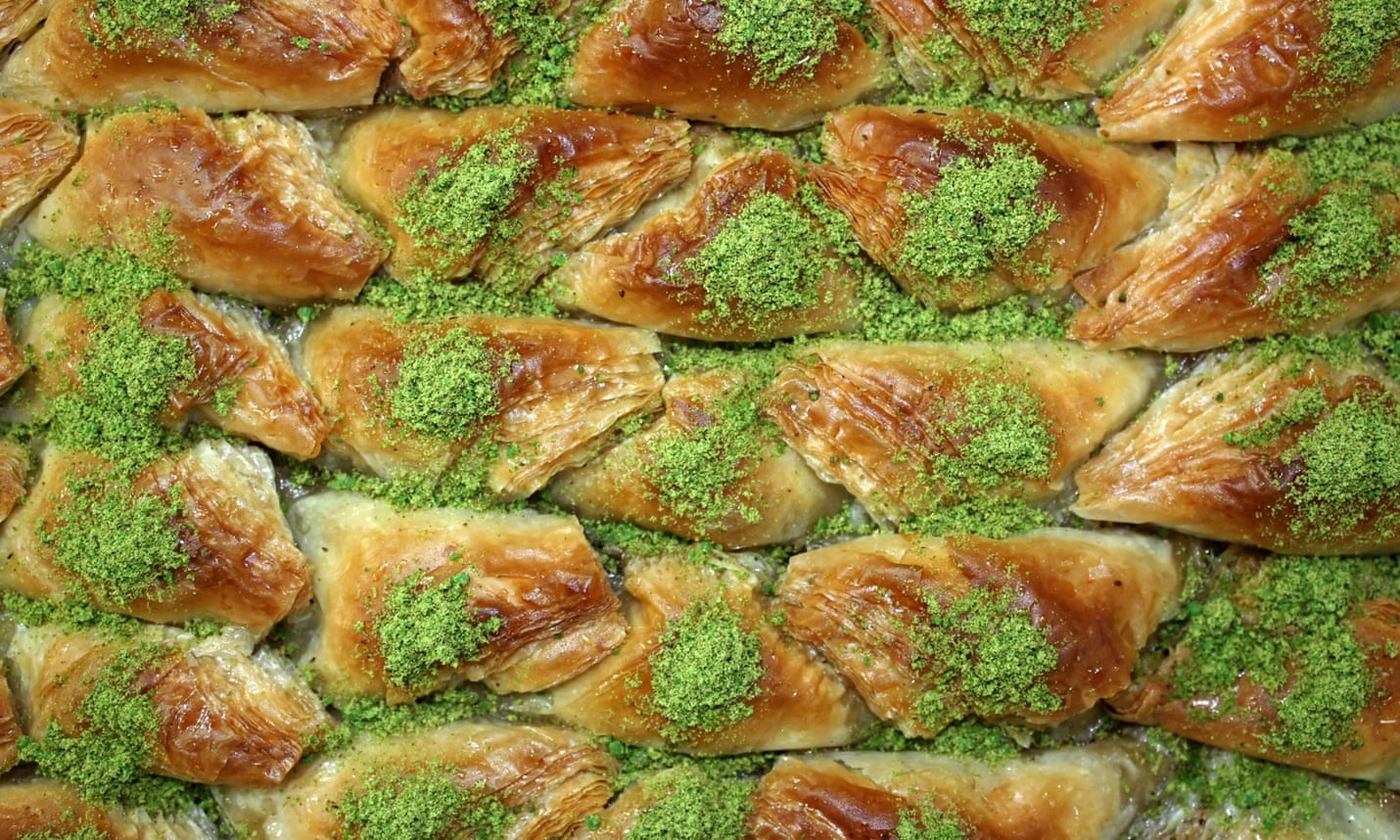
The traditional middle eastern and south-east Europe dessert, baklava.

Gaziantep baklava is baked in a wood-fired oven and made with dozens of layers of gossamer-thin filo pastry, syrup (honey is for amateurs, apparently) and the prized, locally grown Antep pistachio, which gives the filling of the delicacy its distinctive green colour. The nuts were the deciding factor for the EC. The hot, dry climate provides ideal growing conditions and gives the pistachios their bright green (rather than greeny yellow) colour. They’re also harvested in August, one month earlier than elsewhere, when they are higher in protein and fat.
At the last count, Gaziantep has more than 180 bakeries, some with adjoining cafes – serving the delicious finished product. One of the most famous is the Güllüoglu bakery, founded in 1871, which claims to be the world’s biggest baklava producer and has franchises in Istanbul, Athens, Los Angeles, New York and Tallinn. And the production process has changed very little from Byzantine times.

Thursday, February 5, 2015

How Much Do You Like German Bread?

There are a lot of levels of health and the first one is staying without symptoms, not being symptomatic with disease. But the next one would be how much vitality, how much energy do you have, how much work can you do, how much can you accomplish and how happy are you and how connected are you to the world around you? So I said I'll take my chances. Let's do it and see. Because I've had enough experience, it's all anecdotal, it's all from the thousands of people who have come through our schools and the stories that I've heard from them about their healing journeys but I really believe that we can get everything we need and beyond -- can exceed our needs and heal in detox.
 
That's still all anecdotal, but that made her want to find that research and we did some lab studies of our own. We studied a green smoothie and a green drink and we were able to analyze. They have all the computer programs so they could analyze my recipes and put them together in menus to see exactly what we are getting. So we had to really work with all of that. So we worked with the normal what they say this amount of nutrients for kale, whether it's organic or not. If it's organic, I believe and I've read, that there's more nutrients in organic but there's not enough peer reviewed study for us to prove that.

We've got all kinds of support in there including how to set up your raw food kitchen and how to buy your produce and how to rotate your fruits and vegetables so they're always ripe and how to store them and all that kind of stuff that I mentioned that we can't possibly get into in a one-hour interview. So you can break it and it's chewy and you can spread yummies on it. [Laughter] Whatever you like to spread on your bread or make a sandwich out of it and it's quite delicious.

Causes pointed to were their high consumption of beer and fatty foods, decreasing levels of physical activity, and the lack of a Mediterranean diet, which is richer in vegetables, lean meat, and olive oil. Its American counterpart comes higher in calories, contains more fat and other fillers, and is loaded with chemicals and preservatives. Then they are served on a bun made with highly processed white flour. The health differences are staggering.